Showing posts with label Tech. Show all posts

Thursday, September 26, 2019

Amazon wants to put microphones into your rings and glasses

Image from iOS 4 1
At the end of its hardware event today, Amazon  announced a new program for testing and selling its own experimental, limited-volume hardware: Day 1 Editions.
The first of these new products is Echo Frames. These are Alexa-enabled glasses, though, unlike Google  Glass, there’s no camera and no display, just microphones and a speaker.
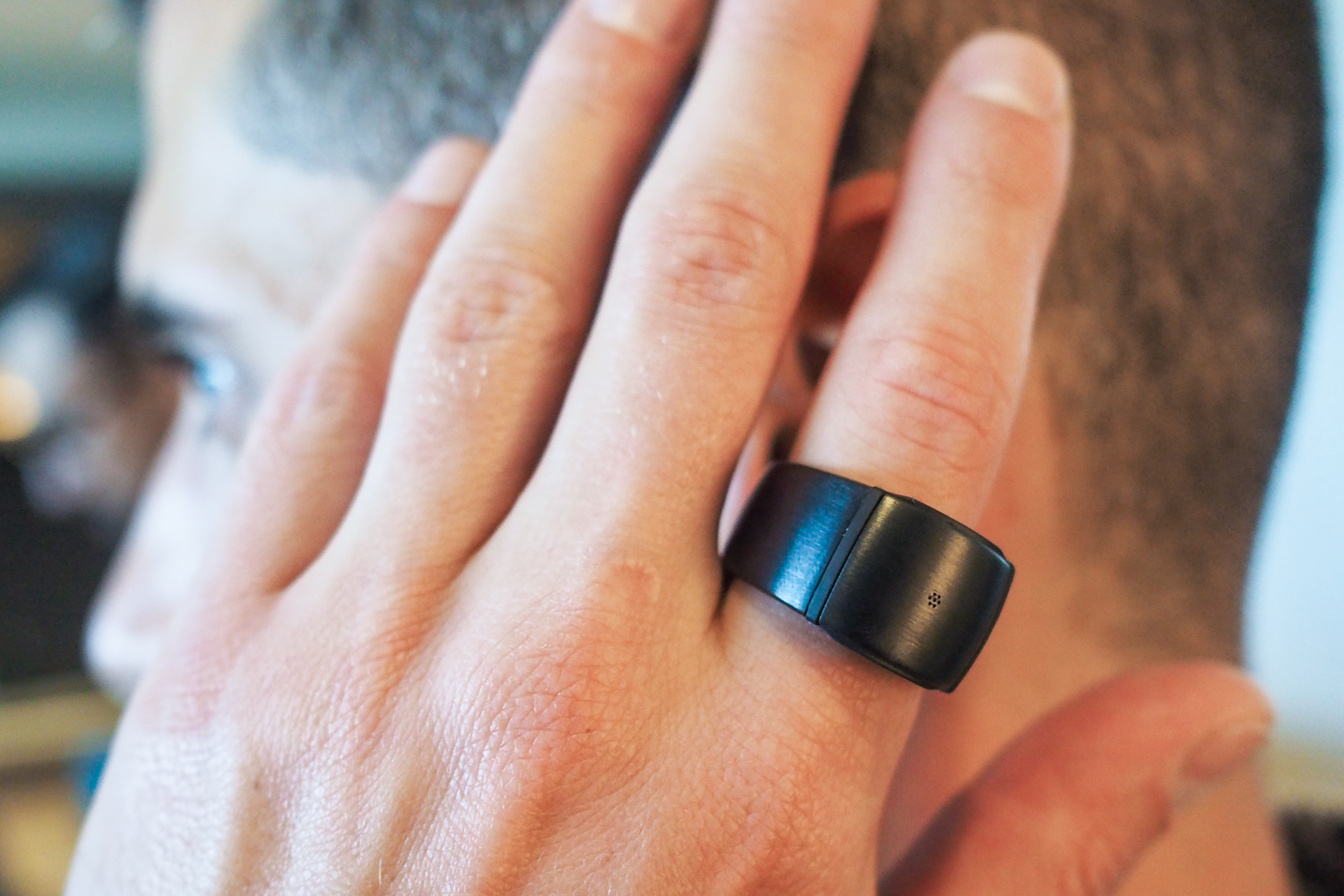
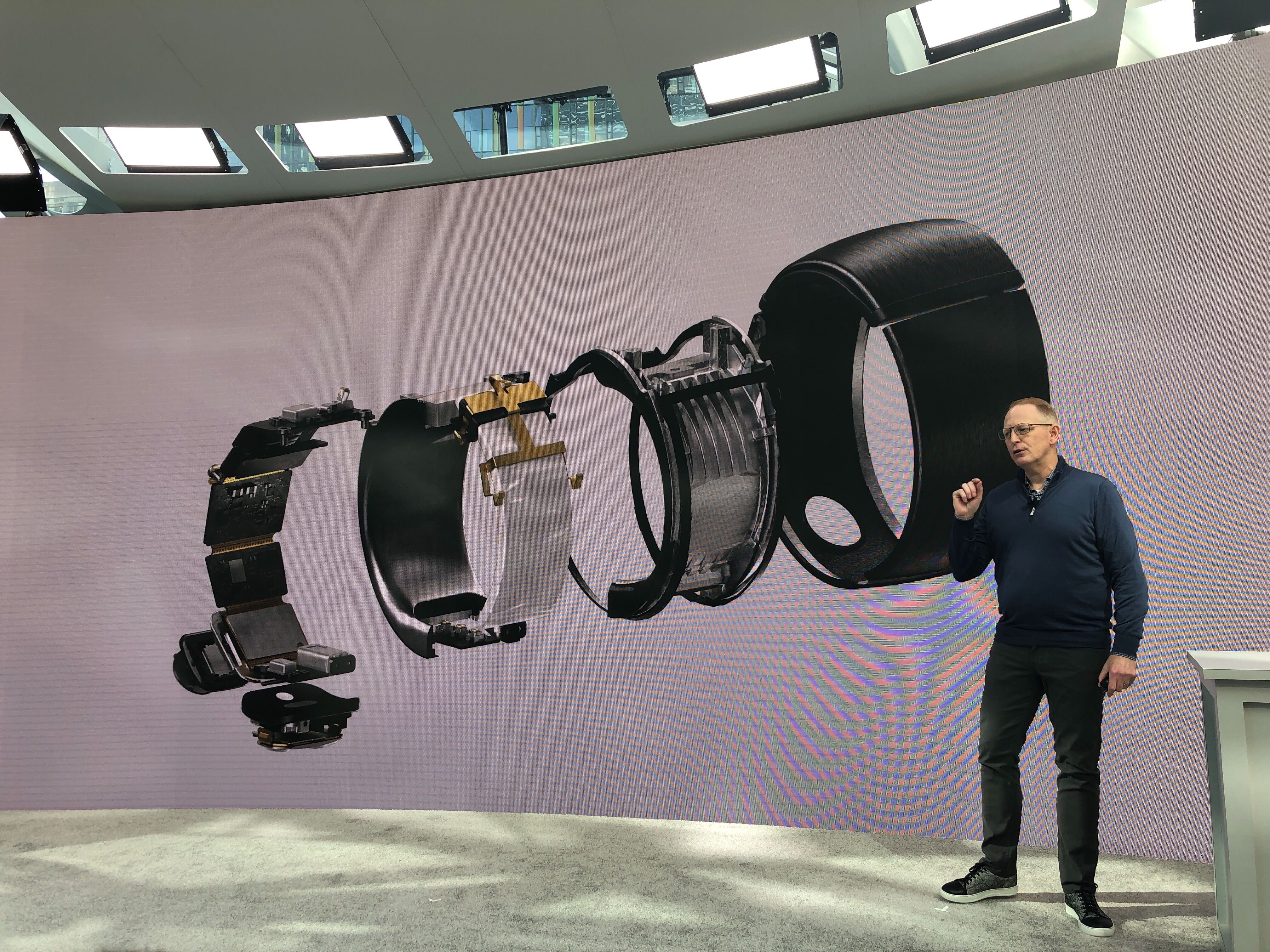
The second is the Echo Loop, a rather large Alexa-enabled ring with two built-in microphones and, of course, a tiny speaker. Both of these will be available on an invite-only basis and in limited volumes later this year.
The frames will retail for $179.99 and the Loop will cost $129.99 for the introduction period.
download 2
The glasses, which will sell without any prescription lenses (though you can add those if you want), weigh in at 31 grams. They aren’t especially stylish, though they look pretty acceptable.
The ring is maybe the oddest product Amazon demoed at its event today. It’s pretty large and I can’t quite see people talking into their rings and then listening to what Alexa has to say in response, but I could be wrong. Maybe it’s the next big thing.
alexa echo amazon 9250076 2
“Paired with your phone, this ring lets you access information throughout the day,” Amazon writes. “It’s super easy to connect with Alexa without breaking stride or digging out your phone, for those simple things like turning on the lights or calculating the tip on your lunch bill. Simply press a button, talk softly to Alexa, and then the answer comes discretely through a small speaker built into the ring.”
To be fair, though, these are very much experimental products that are meant to allow Amazon to get feedback from real customers. But that’s what Amazon said about its Alexa-enabled microwave, too, and now it’s the best-selling microwave on the site.
Image from iOS 5 1
Share:

Nintendo’s ‘Mario Kart Tour’ is out now for iPhone, iPad and Android

mario kart tour ios
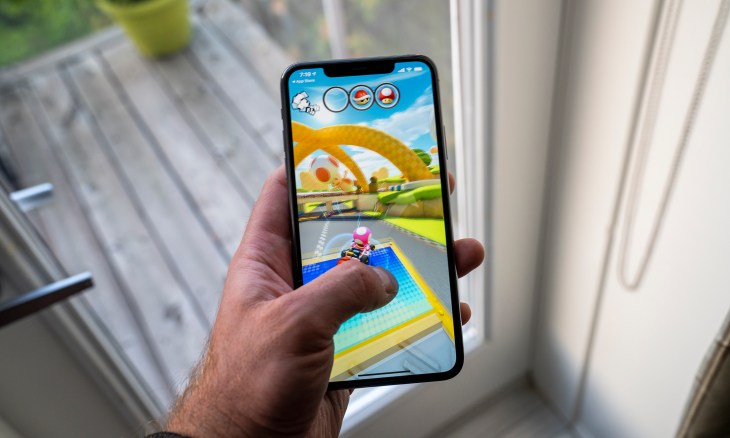
Mario  Kart Tour, Nintendo’s  latest mobile game, is now available on iOS for iPhone, iPad and iPod touch, as well as on Android devices. The game, like Nintendo’s other mobile releases, is free to play, with in-app purchases (in-game currency called “rubies”) that you use for upgrades and unlocks.
Players immediately unlock one rider and get a tutorial to start, which introduces them to the Mario Kart Tour driving mechanics, which are slightly different than the ones you’re probably used to if you’ve played Mario Kart games for Nintendo’s various consoles. Specifically, your kart will always be moving forward, so there’s no acceleration to press; instead, you slide your finger side to side on the screen to steer left and right, with a tap firing off any items or weapons you might pick up.
High scores earn you points that can be redeemed for in-game unlocks, and the game also features other new mechanics, like “frenzy mode,” which gives you a timed period of unlimited item use whenever you pick up three of the same. Special challenges are also new in this mobile iteration, which introduce new ways to win instead of just placing first in a race with other kart drivers. Mario Kart Tour also features online ranking with other mobile players worldwide.
The “Tour” component of the game is also a new twist: Nintendo is mixing courses inspired by real-world cities in with levels that are taken from classic Mario Kart games, and these will be cycling every two weeks for a fresh global tour on a regular basis. In-game characters will also get costume variants that are inspired by these globe-trotting destinations.
Based on Nintendo’s track record, Mario Kart Tour should be perfectly playable without any in-game purchases, but players may feel that they hit a progression wall pretty quickly without picking up some currency. It’ll be interesting to see how this one fares, given that Apple  has just introduced its own Arcade subscription service focused on games that eschew in-app purchase mechanics — including cart racer Sonic Racing, which looks very much like it was once intended to offer similar in-app mechanics before Arcade came along.
Share:

Nigeria’s CcHub acquires Kenya’s iHub to create mega Africa incubator

CChub ihub Acquisition
Two of Africa’s powerhouse tech incubators will join forces. Nigerian innovation center and seed-fund CcHub has acquired Nairobi based iHub — CcHub CEO Bosun Tijani confirmed to TechCrunch.
The purchase amount is undisclosed, but Tijani said CcHub will finance the deal out of its real-estate project to build a new 10 story innovation center to replace its Herbert Macaulay Way building in Lagos.
Details are emerging on how the two entities will operate together, but Tijani noted some degree of autonomy.
“The names will stay the same…iHub  will remain iHub…it is a strong brand…but iHub  will be supported from the central CcHub, which will help them strengthen what they do,” he said.
Per the acquisition, Tijani becomes CEO of both organizations, while Nekesa Were continues as iHub Managing Director. iHub’s existing programs will remain, according to Tijani, but CcHub will extend some of its existing activities in education, healthcare, and governance to Kenya.
CcHub will also use the iHub addition to expand its investment scope. “We’ll now have access to pipeline in Nigeria, Kenya,  and Rwanda,” he said.
CcHub CEO Bosun Tijani
Tijani views the arrangement as a boost to the continent’s tech ecosystem. “It strengthens our ability to support innovation. iHub and CcHub…coming together makes us stronger; it gives us a chance to attract greater resources and talent,” he said.
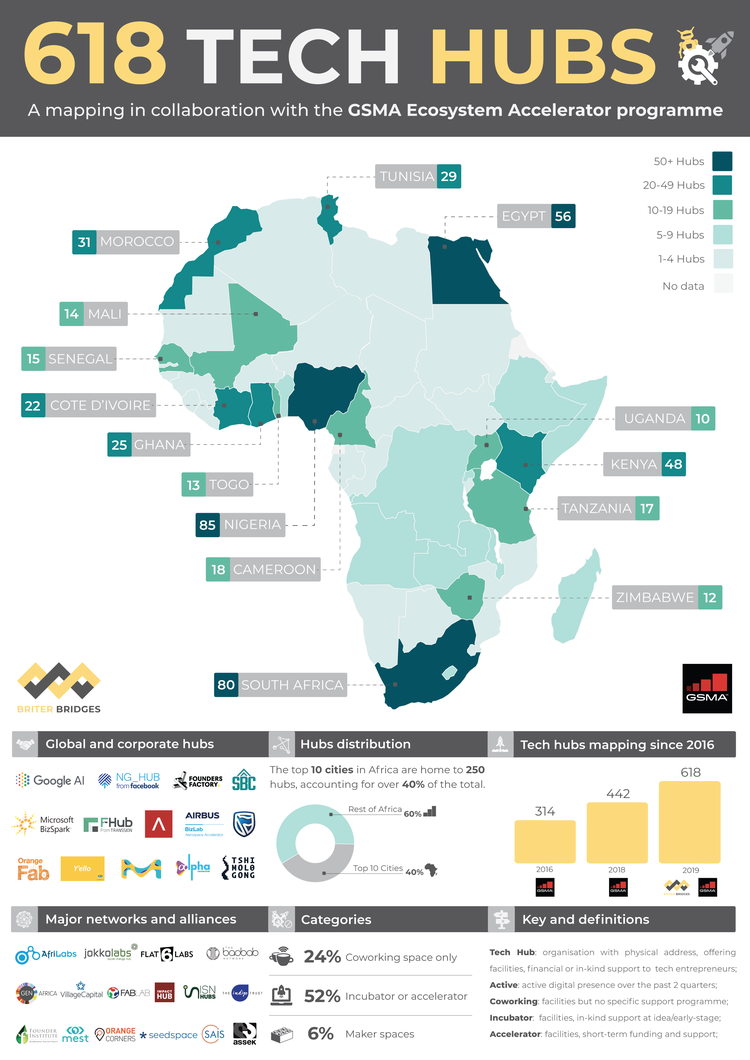
The acquisition joins two of the Africa’s most recognized tech hubs. These innovation spaces, accelerators, and incubators—which tally 618 per GSMA stats—have become focal points for startup formation, training, and IT activity on the continent.
TechHubsinAfricain2019 Briter Bridges
There aren’t official rankings for Africa’s most powerful tech hubs, but if there were, CcHub and iHub would arguably be up top. This would be based on the size of their membership networks, volume of tech related programs, startups incubated, partnerships, and global visibility.
Founded in 2011 in Lagos’ tech-synonymous Yaba suburb, the Co-Creation Hub has grown into a multi-faceted innovation center. The organization manages digital skills programs for entrepreneurs and school kids, startup incubation, and a portfolio of investments through its Growth Capital Fund.
CcHub is considered a go-to spot for any tech related visit to Nigeria. It was Mark Zuckerberg’s  first public stop on his 2016 Africa trip. While leaving a CcHub event in 2018, I noticed the Vice President of Nigeria, Yemi Osinbajo, and his entourage packing into the elevator.
CcHub ZuckerbergTijani and team have mastered gaining partnerships with big global tech names. When Facebook launched its tech space in Nigeria—NG_Hub—CcHub was named lead partner. Google for Startups sponsored CcHub’s Pitch Drive, an African startup tour to Europe and Asia. CcHub also collaborated with the Government of Rwanda this year to open its Design Lab in Kigali, focused on innovating impact solutions in health, education, and governance.
The Design Lab launch extended CcHub’s West Africa reach further east and closer to iHub. The innovation center was co-founded by Erik Hersman in 2010 out of what he saw as a need in Africa’s emerging tech scene “for…creating community spaces…in major cities [for] young entrepreneurs. The nexus point for technologists, investors, [and] tech companies.”
iHub became that central spot in East Africa. Along with M-Pesa mobile-money and a vibrant startup scene, it is one of the pillars that inspired Kenya’s Silicon Savannah moniker.
iHub is also widely seen as giving rise to the Africa’s innovation center movement that inspired the upsurge in tech hubs across the continent.
IHub Kenya PeopleSince 2010, 170  companies have formed out of iHub. It has 16,000 members and has played host to most major visitors to Kenya’s tech scene. After seeing CcHub in Nigeria in 2016, Zuck then headed to Kenya and toured iHub.
There’ll be plenty for continuing coverage on how these two prominent African incubators settle into becoming one big Africa mega-hub. That includes the sustainability question and what this all means to the continent’s tech scene.
At a high level, for now, the CcHub-iHub union creates a direct innovation link between two of Africa’s most active markets for VC and startup formation—Nigeria and Kenya.
In the past, both countries’ techies have shared a healthy rivalry. That could now turn to more  collaborations, as CcHub’s acquisition connects East and West in African tech.
Share:

Facebook announces Horizon, a VR massive-multiplayer world

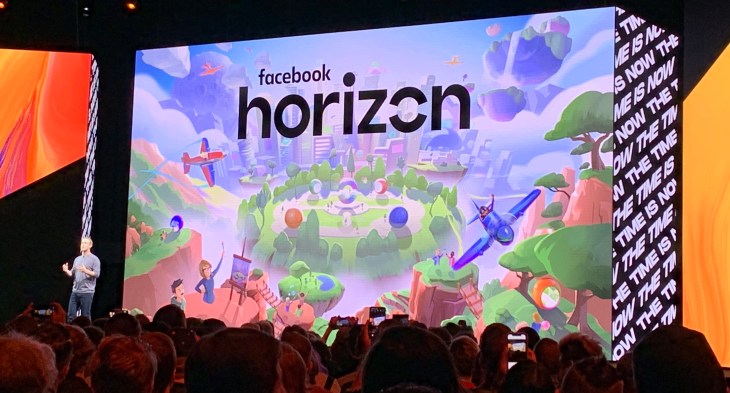
Facebook Horizon
Facebook  today announced it’s building its own Ready Player One Oasis. Facebook Horizon is a virtual reality sandbox universe where you can build your own environments and games, play and socialize with friends or just explore the user-generated landscapes. This is Facebook’s take on Second Life.
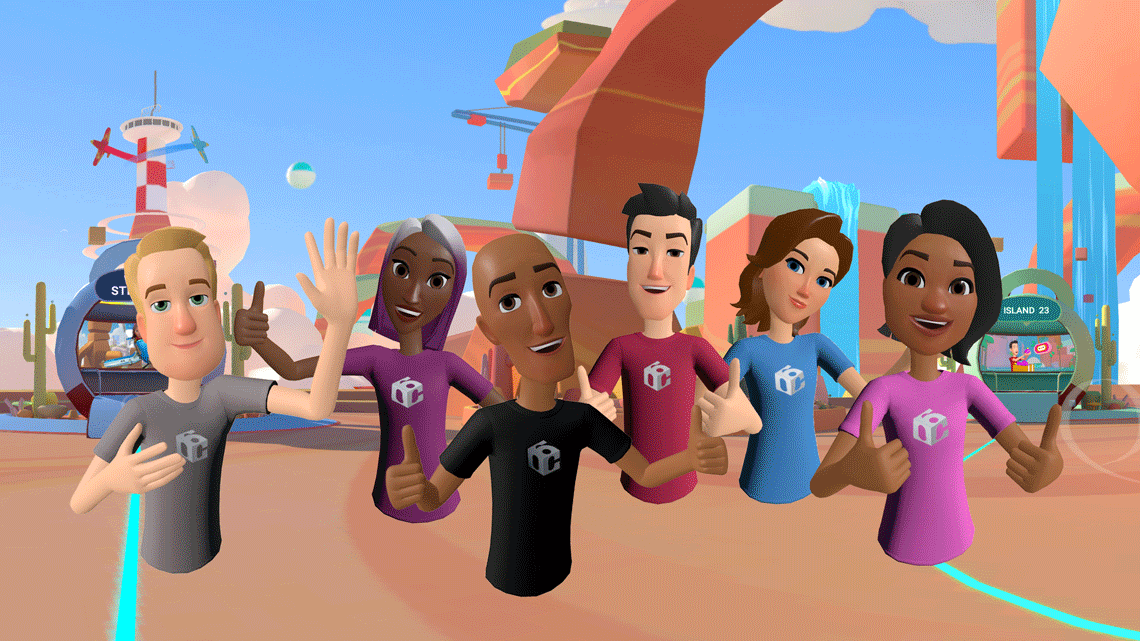
Launching in early 2020 in closed beta, Facebook Horizon will allow users to design their own diverse avatars and hop between virtual locales through portals called Telepods, watch movies and consume other media with friends and play multiplayer games together, like Wing Strikers. It also will include human guides, known as Horizon Locals, who can give users assistance and protect their safety in the VR world so trolls can’t run rampant.
Users interested in early access can apply for the beta here.
Facebook Wing Strikers
As part of the launch, Facebook will on October 25 shut down its existing social VR experiences Facebook Spaces and Oculus Rooms, leaving a bit of a gap until Horizon launches. Oculus  Rooms debuted in 2016 as your decoratable private VR apartment, while Spaces first launched in 2017 to let users chat, watch movies and take VR selfies with friends. But both felt more like lobby waiting rooms with a few social features that were merely meant as a preamble to full-fledged VR games. In contrast, Horizon is designed to be a destination, not a novelty, where users could spend tons of time.

How Facebook Horizon works

At first glance, Horizon seems like a modernized Second Life,  a first-person Sims, a fulfillment of the intentions of AltspaceVR and a competitor to PlayStation’s PSVR Dreams and cross-platfrom kids’ favorite Roblox. Back in 2016, Facebook was giving every new Oculus employee a copy of the Ready Player One novel. It seems they’ve been busy building that world since then.
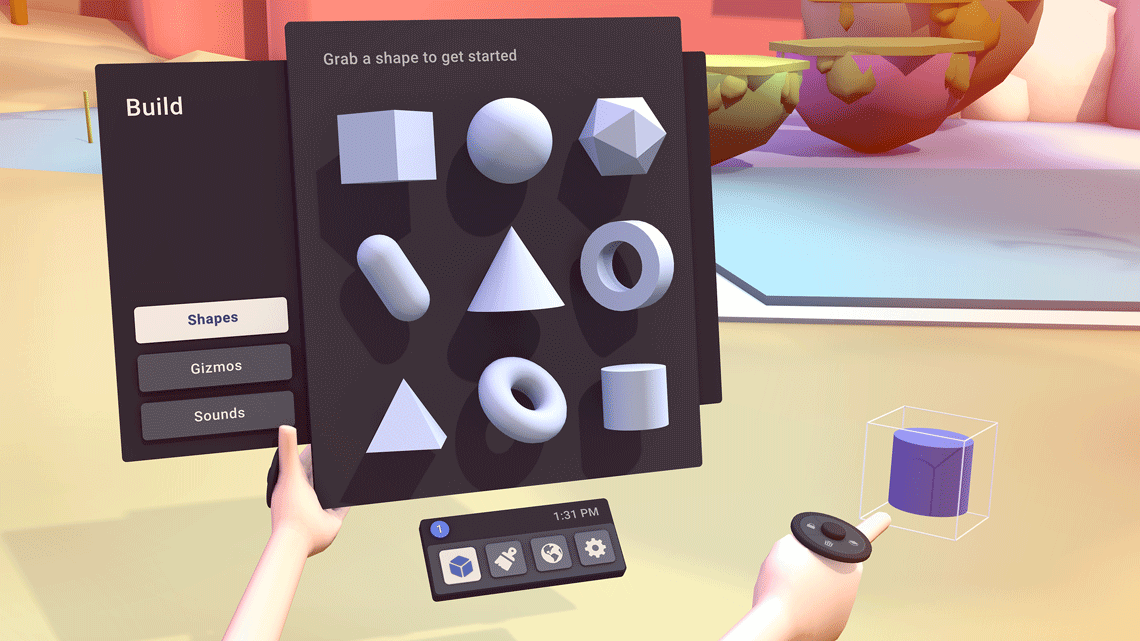
Facebook Horizon will start centralized around a town square. Before people step in, they can choose how they look and what they wear from an expansive and inclusive set of avatar tools. From inside VR, users will be able to use the Horizon World Builder to create gaming arenas, vacation chillspots and activities to fill them without the need to know how to code.
71704442 498340457616226 7020019007591809024 n
Facebook Horizon lets you build objects from scratch

You could design a tropical island, then invite friends to hang out with you on your virtual private beach. An object creator akin to the Oculus Medium sculpting feature lets you make anything, even a custom t-shirt your avatar could wear. Visual scripting tools let more serious developers create interactive and reactive experiences.
Facebook details its Horizon safety features on its “Citizenship” page that explains that “As citizens of Facebook Horizon, it is all of our responsibility to create a culture that’s respectful and comfortable . . . A Horizon citizen is friendly, inclusive, and curious.” Horizon Locals will wander the VR landscapes to answer questions or aid users if they’re having technical or safety issues. They seem poised to be part customer support, part in-world police.
Facebook Horizon Locals
Facebook Horizon will include human Locals who provide safety and technical support

If things get overwhelming, you can tap a shield button to pause and dip into a private space parallel to Horizon. Users can define their personal space boundaries so no one can get in their face or appear to touch them. And traditional tools like muting, blocking and reporting will all be available. It’s smart that Facebook outlined the community tone and defined these protections.
Facebook CEO Mark Zuckerberg  announced Horizon today at the Oculus Connect 6 conference in San Jose. He discussed how “Horizon is going to have this property where it just expands and gets better” as Facebook and the community build more experiences for the VR sandbox.
Facebook Horizon World Builder
Facebook lets you build your own islands and other locales in Horizon

Horizon makes perfect sense for a business obsessed with facilitating social interaction while monetized through ad views based on time-spent. It’s easy to imagine Horizon including virtual billboards for brands, Facebook-run shops for buying toys or home furnishings, third-party malls full of branded Nikes or Supreme shirts that score Zuckerberg a revenue cut or subscriptions to access certain gaming worlds or premium planets to explore.
As Facebook starts to grow stale after 15 years on the market, users are looking for new ways to socialize. Many have already ditched the status updates and smarmy Life Events of Facebook for the pretty pictures of Instagram and silliness of Snapchat. Facebook risked being cast aside if it didn’t build its own VR successor. And by offering a world where users can escape their real lives instead of having to enviously compare them to their friends, Horizon could appeal to those bored or claustrophobic on Facebook

source: techcrunch
Share:

FLUTTERWAVE - Disrupting The Future Of Online Payments Processing In Africa

When a formidable team of innovators rub minds together to create a product that would be industry-changing, it is called a disruption.
This is the story of flutterwave.
Are you a business owner looking to do business in Africa but managing payments seamlessly is a huge source of concern for you? Then read on . 
By now it's no longer news that there's disruption in the finance industry especially within Nigerian and generally on the African continent as a whole, technology is re-shaping how payments are made not just within Nigeria and Africa but in the world at large. One of such companies at the intersection of this rapid growth and innovation that has piqued interests is flutterwave.

What is Flutterwave? 


Flutterwave is an online payment processing company focused on helping and connecting businesses and their customers with secure and seamless payment experience.
Flutterwave works with banks across Africa by providing the needed technology and integrations for payments in local currencies with local debit cards, bank accounts or mobile wallets across several African countries. It was founded in 2016 by a team of ex-bankers, entrepreneurs and engineers and one notable member of the team is Iyinoluwa Aboyeji (a co-founder at Andela one of the African continent's most notable tech startup). 

Headquartered in San Francisco (which was stragetic to the company landing international funding) with offices in Lagos, Nairobi, Accra, Johannesburg flutterwave's service allows consumers to pay for things in their local currency. Before flutterwave, there was no universal payment method in Africa for businesses to accept and transfer payments which significantly created a gap for businesses as well as consumers. African businesses have a hard time accepting payments within the continent as well as outside. This digital divide also makes it difficult for companies like Google, Netflix,Amazon and Facebook to accept local payments from African customers.This was one of the motivating factors for one of the co-founders, Iyinoluwa Aboyeji to leave Andela ( a company he had recently cofunded for flutterwave, a passion to place Africa on the global digital and payments landscape). 

In 2017, it was able to raise over $10 million in a Series A round of funding. The round was led by Greycroft Partners and Green Visor Capital with participation from Y Combinator and Glynn Capital which flutterwave used to get more talents and build it's global reach. 

To date, the company has processed more than $2.5 billion in payments (as of 2019, flutterwave) across 100 million transactions.  350 currencies across 30 African countries are currently accepted by flutterwave and a small service charge is collected from businesses, which it shares with banks. It has partnered with 50 banks in Africa and 1200+developers build on Flutterwave for a company that's 3years old that's laudable of course having a highly skilled team is evidently a plus as well. To advance their goal as the payments platform to be reckoned with, the Flutterwave team has integrated other foreign payments API to theirs, making transactions between buyers and sellers globally even more seamless. businesses that use flutterwave include Uber, flywire, OjaExpress, Kikikamu etc

Lifechanging Innovations 
Products that have been developed by flutterwave as it charts frontier leadership within the fintech industry include:

Rave (flutterwave for business) is a payment service created by flutterwave that enables merchants accept global payments from card, bank accounts and USSD. It supports payment from 150+ currencies which is a breathe of fresh air for African businesses. Rave has no set up or monthly fees costs, you can start with right away and only pay for the transactions you accept Rave is now connected to Xero, Quickbooks, Sage and Zoho.

GetBarter (flutterwave for consumers) is a lifestyle payment solution launched by flutterwave alongside Visa. Visa cardholders will be able to make payments within the app and make online and mobile transactions by attaching their card details to their GetBarter app profile while non-card carriers can generate a virtual Visa card upon registration. GetBarter users can carry out their business transactions, pay utility bills and send payments to thousands of  anywhere Visa is accepted globally.

FlutterWave's Challenges
Amidst these rave reviews (pun intended), there have been some reservations like one’s inability to securely capture a payment when you make use of your own forms, unlike its foreign peers: Stripe and Fattmerchant, that allow you to tokenize your credit card payments in a safe way, while allowing you to use your own forms. But it cannot be ignored, the unique abilities that Flutterwave possesses when it comes to payment on a continent where very few are in possession of credit cards is quite a feat on its own. 

Achievements
  1.  2017 -  raised $10 million in a Series A  funding.
  2. 2018 - completed an extension of its Series A funding round backed by global payments companies like CRE Ventures, Fintech Collective, MasterCard 4DX Ventures amongst others and raised a total of $20 million.
  3.  2018 - Flutterwave received an award for the Best Payments Company at the Ghanaian eCommerce Awards ceremony in Ghana.
  4.  By the end of 2018 there was 550% growth in the customer base for rave(flutterwave for business). Also it had 26,000 users and counting.
  5. 2019 - Flutterwave partnered by Visa launch consumer payment product called GetBarter.
  6. 2019 - Flutterwave currently partners hotels.ng on its internship project for young developers IN Nigeria.


In all if you are a business looking for a way to create a seamless payments system within your business within the African continent then flutterwave is your best bet for a seamless experience.
Share:

Saturday, September 5, 2015

Samsung Gear S2 is More than your Average Smartwatch


Samsung has unveil its new smartwatch, and the Samsung Gear S2 is more than your average Smartwatches, which comes with a realistic watch style rendering. You could switch your watch interface according to your taste.

Being a design person, i think i would personally score Samsung Gear S2 a 100% mark. It's not just adorable it's also packed with useful applications like the sHealth application that can monitor your daily activities.


  • S Health GUI
    Monitor daily activity levels
  • S Health GUI
    Track water vs. caffeine intake


  • S Health GUI
    Measure your pulse
  • S Health GUI
    Select type of exercise


  • S Health GUI
    Count your steps

Samsung Gear S2 also comes with different variation and specs, so there'll definitely be one that will fit into your budget, hopefully.

The Samsung Gear S2 could as well become a game changer in the Smartwatch industry, and i am predicting a great sales for samsung provided the price of the device is reasonable. Regardless, i would definitely love to have one.  :) 

There’s no pricing or availability yet but you can check out the official ad for Samsung Gear S2.


Report by:TechVersusMan
Share:

Saturday, June 27, 2015

YC-Backed Cymmetria Uses Virtual Machines To Decoy And Detect Hackers

YC-backed Cymmetria, which is uncloaking from stealth now after around a year working its cyber security startup business, wants to tilt the traditional security odds so it’s hackers who are left feeling vulnerable and on their guard — by giving the businesses whose systems are under attack a ‘home advantage’.
How does it flip the attacker/attacked dynamic? By creating decoys which are embedded into the network and designed to draw hackers to them, making it quicker and easier for a business to detect and mitigate a security breach. And harder for a hacker to know what’s what.
“I’ve been sitting on this idea for several years, really, waiting for the right timing,” says co-founder Gadi Evron, who used to head up the Israeli government’s Internet security operation, and has also worked in senior security roles for PwC and Kaspersky.
“I got somewhat exhausted with the security industry. From various directions. In a way we’re very defeatist — we go to work everyday knowing that the attackers will succeed if they just want to. That eventually they will get in. Two and a half years ago people started saying the words ‘assume compromise’. Assume the attacker’s already inside. And then suddenly we all discovered that is not just the perception but rather the reality of how things actually work.”
High profile hack attacks make the news every week. Right now the attention is on the U.S. Office Of Personal Management data breach. Last year a massive Sony Pictures hack which leaked all sorts of salacious celebrity gossip into the public domain via a dump of the stolen emails turned into a media feeding frenzy. A huge breach of retailer Target’s systems in which millions of customer credit card details were reported compromised, back in 2014, has cost the company some $162 million purely in expenses — minus any class action lawsuits. Earlier this year health insurance providerAnthem fessed up to a data breach likely compromising the personal data of tens of millions of its customers. The list goes on.
Current solutions generate thousands upon thousands of alerts every day. We generate one because our decoys are real machines.
“Every day there is another data breach,” says Evron. “That was very frustrating for me personally.” Cymmetria was born out of that sense of frustration — with the team hoping to shake up a reactionary status quote by doing something “inherently different in the security industry”, as Evron puts it.
Their focus is APT attacks. Aka: advanced persistent threats — where attackers, perhaps State-sponsored, are aiming to get into a network and lurk undetected for a long time in order to steal large amounts of data.
“The first value proposition is essentially one alert — one critical alert,” he says, explaining how Cymmetria works. “Current solutions generate thousands upon thousands of alerts every day. We generate one because our decoys are real machines and nothing should run on them except for what we put on them. Which exactly means that if anything now runs on that computer that is not ours that is a 100 per cent indication there is an attacker now in the network. There are no false positives.”
At that point Cymmetria also performs forensic analysis on the attack, and offers an action plan on how to mitigate it — using a company’s existing systems and security infrastructure, with which it integrates. It’s not the only decoy-based security startup out there but Evron argues the focus on integrating with a business’ operations and processes makes its approach distinct.
“There are quite a few startups out there that are in the same active defense or cyber deception space but I can’t really say that any of them are working exactly the way we do it. Some of them just deploy decoys across the network, some of them are trying to use SDN technology for datacenters. We haven’t really seen anybody out there trying to approach this from a management perspective and a business perspective,” he says.
“We automate forensics. They now can know what attack an attacker used, vulnerability credentials, Trojan horse, everything the attacker did — where they connected on all the networks, they already have ready made information becoming available to them,” he adds, noting that the typical security scenario is that a breach is not detected until long after it has occurred — whereas Cymmetria is able to flag it up if not quite in real-time, then in a “significantly reduced time window”.
“You get immediate information that you can start using immediately to mitigate.”
What are the decoys exactly? Virtual machines, making them indistinguishable from any other machine on the network, according to Evron. Cymmetria’s approach also doesn’t require companies to install on premise hardware or put agents on computers or change existing network structure. As near to ‘plug and play’ as possible is the idea. He says a generous estimate for getting the system up and running is just a day.
“Essentially they are real machines. They’re machines just like any other. They could be a CEO laptop, they could be a super secret backup. But essentially attackers are going to see computers around the network, computers and other types of resources around the network that are simply not real — and they’re not going to be able to distinguish what’s real and what’s not,” he adds.
“We don’t mimic. That’s exactly the point. We create real machines — we use the world of virtualization. Ten years ago if an attacker would see a virtual machine they’d say that’s a researcher, trying to mimic a real machine. Today, when you look at organizations, a lot is in the cloud. Local cloud with virtualized environments. Global cloud like Amazon, Google, whatever. But essentially these are part of the corporate network. They’re just regular machines. So as long as my machines are just like any other machines they have no way of distinguishing.”
The system uses a series of breadcrumbs to lead attackers to the decoys. “When the attackers try to spread through an environment they essentially look for certain things. These signposts or breadcrumbs are what’s going to lead them towards the decoys,” is how Evron explains this element, careful not to give away too many signposts (given the game of smoke and mirrors it intends to play with attackers).
The primary target market for Cymmetria is large enterprises and Fortune 500 companies, plus financial institutions and banks — although security is generally rising up every digital business’ agenda. It has “several” early users at this point, including a major U.S. bank that it’s working with as a “design partner” — so tailoring the system to meet their needs while using their feedback to help shape the software. Its first user deployment was this February. Evron says it hasn’t yet encountered an APT attack with this initial group of beta users.
In terms of funding so far, Cymmetria has taken in early investment from several angels, YC, Seedcamp and U.S. VC firm Felicis. The business model is a multi-layered SaaS. “We support different types of models for different types of customer,” says Evron. “From on premise to the cloud, we support it all.”
Cymmetria is the first Israeli security company to be selected by Y Combinator. The team will be presenting at demo day at the end of August, when it will be looking raise its next round and start to scale up and grow the business.
source: TechCrunch
Share: