Showing posts with label TechCrunch. Show all posts

Thursday, September 26, 2019

Facebook announces Horizon, a VR massive-multiplayer world

Facebook Horizon
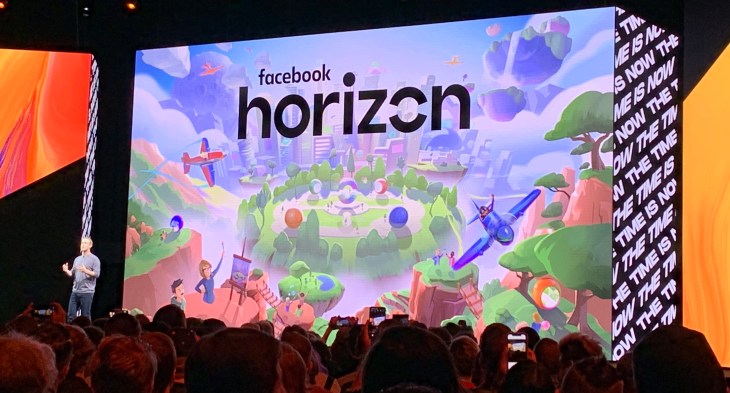
Facebook  today announced it’s building its own Ready Player One Oasis. Facebook Horizon is a virtual reality sandbox universe where you can build your own environments and games, play and socialize with friends or just explore the user-generated landscapes. This is Facebook’s take on Second Life.
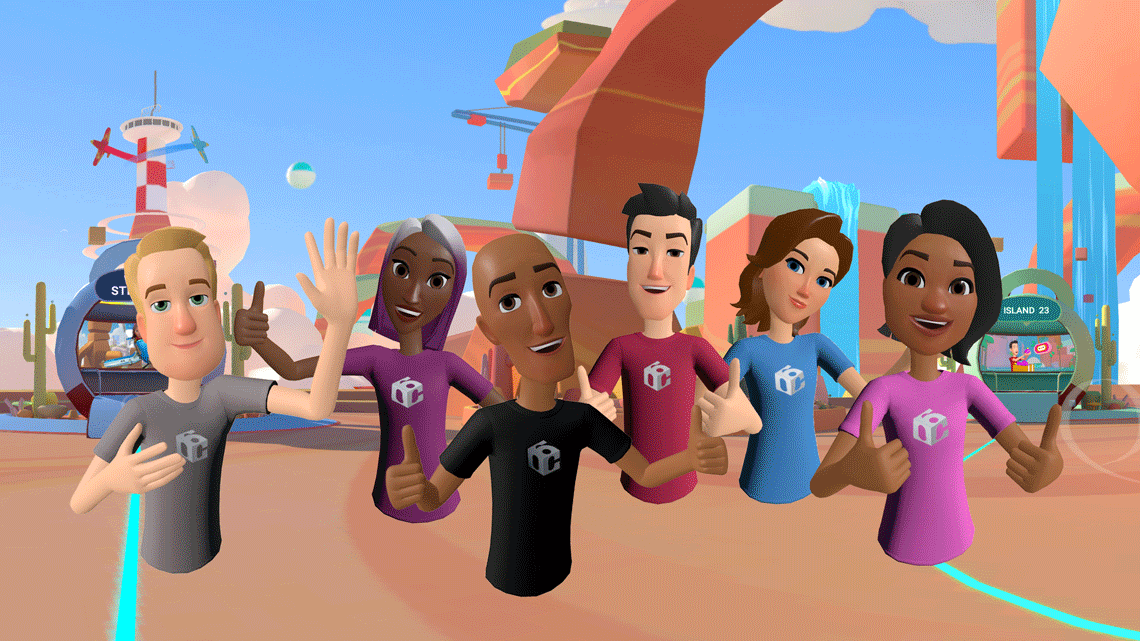
Launching in early 2020 in closed beta, Facebook Horizon will allow users to design their own diverse avatars and hop between virtual locales through portals called Telepods, watch movies and consume other media with friends and play multiplayer games together, like Wing Strikers. It also will include human guides, known as Horizon Locals, who can give users assistance and protect their safety in the VR world so trolls can’t run rampant.
Users interested in early access can apply for the beta here.

Facebook Wing Strikers
As part of the launch, Facebook will on October 25 shut down its existing social VR experiences Facebook Spaces and Oculus Rooms, leaving a bit of a gap until Horizon launches. Oculus  Rooms debuted in 2016 as your decoratable private VR apartment, while Spaces first launched in 2017 to let users chat, watch movies and take VR selfies with friends. But both felt more like lobby waiting rooms with a few social features that were merely meant as a preamble to full-fledged VR games. In contrast, Horizon is designed to be a destination, not a novelty, where users could spend tons of time.

How Facebook Horizon works

At first glance, Horizon seems like a modernized Second Life,  a first-person Sims, a fulfillment of the intentions of AltspaceVR and a competitor to PlayStation’s PSVR Dreams and cross-platfrom kids’ favorite Roblox. Back in 2016, Facebook was giving every new Oculus employee a copy of the Ready Player One novel. It seems they’ve been busy building that world since then.
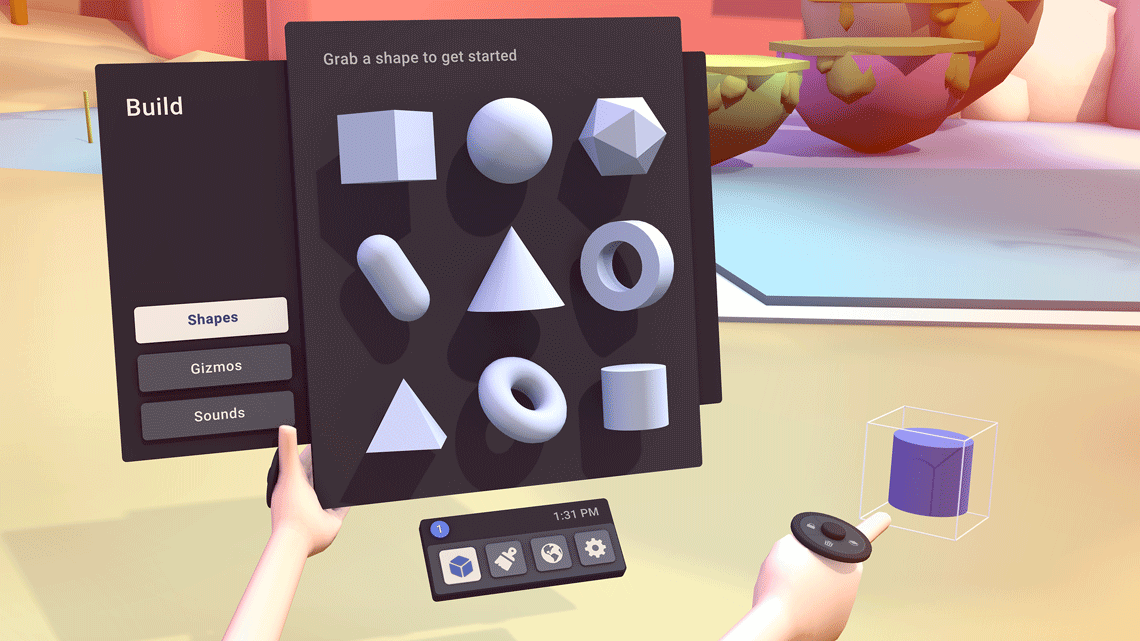
Facebook Horizon will start centralized around a town square. Before people step in, they can choose how they look and what they wear from an expansive and inclusive set of avatar tools. From inside VR, users will be able to use the Horizon World Builder to create gaming arenas, vacation chillspots and activities to fill them without the need to know how to code.
71704442 498340457616226 7020019007591809024 n
Facebook Horizon lets you build objects from scratch

You could design a tropical island, then invite friends to hang out with you on your virtual private beach. An object creator akin to the Oculus Medium sculpting feature lets you make anything, even a custom t-shirt your avatar could wear. Visual scripting tools let more serious developers create interactive and reactive experiences.
Facebook details its Horizon safety features on its “Citizenship” page that explains that “As citizens of Facebook Horizon, it is all of our responsibility to create a culture that’s respectful and comfortable . . . A Horizon citizen is friendly, inclusive, and curious.” Horizon Locals will wander the VR landscapes to answer questions or aid users if they’re having technical or safety issues. They seem poised to be part customer support, part in-world police.
Facebook Horizon Locals
Facebook Horizon will include human Locals who provide safety and technical support

If things get overwhelming, you can tap a shield button to pause and dip into a private space parallel to Horizon. Users can define their personal space boundaries so no one can get in their face or appear to touch them. And traditional tools like muting, blocking and reporting will all be available. It’s smart that Facebook outlined the community tone and defined these protections.
Facebook CEO Mark Zuckerberg  announced Horizon today at the Oculus Connect 6 conference in San Jose. He discussed how “Horizon is going to have this property where it just expands and gets better” as Facebook and the community build more experiences for the VR sandbox.
Facebook Horizon World Builder
Facebook lets you build your own islands and other locales in Horizon

Horizon makes perfect sense for a business obsessed with facilitating social interaction while monetized through ad views based on time-spent. It’s easy to imagine Horizon including virtual billboards for brands, Facebook-run shops for buying toys or home furnishings, third-party malls full of branded Nikes or Supreme shirts that score Zuckerberg a revenue cut or subscriptions to access certain gaming worlds or premium planets to explore.
As Facebook starts to grow stale after 15 years on the market, users are looking for new ways to socialize. Many have already ditched the status updates and smarmy Life Events of Facebook for the pretty pictures of Instagram and silliness of Snapchat. Facebook risked being cast aside if it didn’t build its own VR successor. And by offering a world where users can escape their real lives instead of having to enviously compare them to their friends, Horizon could appeal to those bored or claustrophobic on Facebook

source: techcrunch
Share:

Friday, July 4, 2014

Music Streaming Eats Downloads With On-Demand Up 42% Over 2013, Digital Sales Down 12%


Nielsen’s U.S. music report on the first half of 2014 shows digital music consumption rapidly shifting from downloads to streaming. On-demand streaming was up 42% over the first half of 2013, racking up 70 billion play in the first half of 2014. Meanwhile, digital track sales fell 13% to 593.6 million and album sales fell 11.6% to 53.8 million. The report on US trends (not international) makes Apple’s acquisition of Beats looks smart, as its iTunes download sales model is quickly dying out. As a whole, dismal digital and physical sales dragged total music sales plus streaming industry down 3.3%.
Back in the analog world, hipsters are making a serious impact as vinyl sales rose 40% over 2013 to 4 million in the first half of this year. That’s the only medium where sales grew.

[Update: It's important to note that abroad, where iTunes is available in 83+ countries and streaming services often aren't, the download may survive longer.]
Music Sales And Streaming Numbers
beats-personalizationIf you use the standard 10X multiplier convert album sales to tracks, you get a combined 1.131 billion songs sold in the first half of 2014, down 12% from that period in 2013.
While YouTube’s music videos have been strong provider of music streaming for years, the rise of apps like Spotify is pushing on-demand audio music streaming to grow faster (+50%) than video (+35%). The two are now nearly the same size, as 33.65 billion songs were streamed in the first half of 2014, compared to 36.64 billion music video streams. At this rate, pure audio streaming will overcome music video streaming in the U.S. by the end of 2014. Internationally, where many of the top streaming apps aren’t always available, YouTube is probably still a bigger chunk of consumption.

You can see Nielsen’s full report here:

The State Of MusicTech

The music industry’s rapid recent changes make more sense after looking at this report. With the death of the download and the rise of the stream, power is up for grabs. While iTunes and to a lesser extent Amazon ruled the age of the legal download, Spotify, Google Music, and Beats are poised to reign over the streaming era.
That’s why Apple bought Beats. A source close to iTunes’ executives told me before the acquisition that Apple didn’t want to shock users and the music industry’s bottom line by suddenly converting iTunes into a streaming service. Instead, it bought Beats to allow for a graceful transition, permitting late-adopters to stick with the familiar a la carte download model while early adopters moved to Beats’ all-you-can-hear streaming subscription.
milk_music_-_with_dial_-_foster_the_peopleGoogle just acquired contextual playlist app Songza to bolster its bolster its on-demand Google Music All-Access streaming service. Google’s combatant looked a bit dry before, especially compared to Beats’ focus on expertly crafted playlists for different themes, situations, and moods. Now Google Music has a more human understanding of what people want to hear and when.

Spotify has raised over a half a billion dollars, making it too big to buy for all but the biggest players like Google, Microsoft, and Facebook. At this rate it’s going to fly independent into an IPO, though that could be tough to sell since it’s saddled with high royalty rates that scale alongside it’s popularity. Spotify bought data provider EchoNest earlier this year, and is now experimenting with an API that let’s users play their Spotify music through third-party apps. Becoming the legal backbone of music streaming in tons of apps could make its subscription more attractive to users, and I see developing an ecosystem of niche music apps around it as high-potential way to fight the platform owners.

Samsung is trying to popularize its own device-specific music service with Milk, but since its phones run Android, it highly vulnerable to Google’s native offering. While Pandora still has a huge user base, personalized radio has been commoditized and bolted on in the form of iTunes Radio and Spotify’s ad-supported version. Meanwhile, Pandora’s licensing model doesn’t allow it to offer on-demand song choices like they do, which is why I foresee it struggling in years to come.

songza-music-conciergeSoundCloud offers on-demand streaming of songs and long mixtapes that users and artists upload themselves. It’s seen labels cracking down on unlicensed streaming through the app, which is trying to build out its own advertising system. While music fans view it as an authentic place to connect with artists, it’s still figuring out how to become a succesful business. The “YouTube of music” might benefit from being acquired, though Twitter recently passed on the idea, which I believe was because it needed to spend the money to get its own monetization squared away by buying ad tech companies instead.
Amazon just launched its Prime Music on-demand service.

 But rather than trying to win over serious music fans, it’s using it to simply add value to Prime subscriptions that help it earn money by selling physical goods.


It’s more of a threat to services courting casual listeners like Pandora who just want to hear something and aren’t too picky. YouTube is expected to launch its on-demand music streaming subscription service soon as a complement to its ad supported music video streaming that gets little press but is extremely popular, especially with kids. While the on-demand service has a tough uphill climb ahead given Google already has its native Music All-Access service to promote, its free browser-based videos reduce the need to pay for a dedicated music app.

In 15 years we’ve gone from CDs to Napster piracy to iTunes downloads to Pandora radio to YouTube’s music video streaming to Spotify’s audio streaming app. Perhaps the next shift will finally see the labels loosen their death grips and allow a cornucopia of music discovery apps to flourish atop a few legal rights holders so everyone can get a listening experience that’s their jam.

Source: TechCrunch


Share:

Tuesday, June 25, 2013

Advice From The Game Maker That Made GungHo Worth $14B: “Listen To Your Wife.”


puzzle-dragonsOne of the most absurd stories this year has been the rapid rise of Gung-Ho, the Japanese gaming company that saw its stock surge by more than 6,000% in a single year because of one hit mobile game called Puzzle & Dragons.
The company is now worth $14.4 billion on public markets. That’s more than twice as much as Electronic Arts is worth and about seven times Zynga’s market capitalization. For a brief moment, GungHo even surpassed Nintendo’s valuation earlier this month.
GungHo’s rise came through Puzzle & Dragons, a title that earned it an estimated $113 million in April — solely in Japan. It also recently hit 15 million users just a week ago, primarily in Japan.
The game itself is a puzzle matching title. The player has to line up several matching tiles in a row and they collect cute animal characters as they level up and battle other monsters and bosses.
The company’s success underscores a big shift in power between mobile gaming platform providers like DeNA and GREE, which ruled in a predominantly feature phone era, and first-party game developers, which don’t need to rely on an extra distributor on top of Apple’s iOS or Google’s Android platforms.
For the company itself, which is 300 employees strong, Puzzle & Dragons’ massive success has begged the question from rival developers — “What’s your secret? How’d you do it?”
But producer Daisuke Yamamoto could only say, actually half-seriously, “Listen to your wife.”
After being originally inspired by another Match-3 game called “Dungeon Raid,” he created a concept with more Dragonball-like art and a wizard-like theme.
Then he just listened to a lot of the improvements his wife wanted in the game.
Initially, it was just a team of four with him as the producer and other programmers and designers. It took a few days to develop the game, and then six and a half months until the company felt it was strong enough to go live.

O’NeillAmong the many changes his wife wanted: the ability to move a stone around the entire game board, instead of only one slot over at a time. She also wanted larger stones on the screen. He said that womens’ longer fingernails often get in the way of playing the game, so they need to be bigger to make the UI more player-friendly.

yamamotoAs the game grew into a cultural phenomenon, it kept taking GungHo’s servers down. The company started giving away virtual stones as an apology, giving rise to the word, ‘Wabishi,’ which is a combination of the Japanese words for ‘stone’ and ‘apology.’
He also said the company doesn’t internally focus on quantitative metrics that much, and instead relies on qualitative feedback from Twitter. That’s a pretty big difference from other freemium gaming companies, which focus on user funnels and retention rates over several days to a week to a month.
“Japanese people are really conservative. They don’t disclose their actual names,” said in an interview at Supercell’s Free Your Play event in Helsinki last week. “Because you can use a nickname on Twitter, it’s a much more effective way to listen than Facebook.”
As revenues ballooned, GungHo’s stock has gone on a rampage, growing from a valuation of just over $200 million a year ago to $14.4 billion today.

But Yamamoto says internally they try not to pay attention to the company’s soaring valuation. “We’re try not to focus on the stock prices. We just focus on creating games and that’s all we do,” he said.
He also said that even though GungHo is now worth more than longtime mobile gaming giants DeNA and GREE, they don’t intend to go for any kind of platform play.
“We’re pretty much not in favor of platforms like [DeNA's] Mobage and GREE. DeNA and GREE are IT companies. They are not gaming companies. All they focus on is how much revenue they will have,” he said. “But for us, we’re a gaming company. We emphasize game creatives. If all Japanese gaming companies started to focus on the creative side, it would be a really good move for the entire industry.”
He says to celebrate the game’s success so far, his team “just drank beer and ate pizza.”
He said his life hasn’t changed that much since the game became a massive hit. But he’s hoping that he can build out stronger branding for Puzzle & Dragons. “I’ve always wanted to do a game with good characters and IP [intellectual property],” he said.

So it wouldn’t be that surprising to see GungHo come out with merchandising and licensing deals akin to what we’ve seen with Angry Birds-maker Rovio or Cut The Rope-maker Zeptolab.
The company is also focused on improving localization for Western markets. Currently, the game seems to have done some basic translation work but the tutorials and art could probably be localized more. The company just announced a partnership with Finland’s Supercell to build in a bunch of exclusive in-game features that will appear in both Puzzle & Dragons and Clash of Clans.

“We’re not really satisfied,” Yamamoto said. “We’ve just been quiet so far, but we’ll be aggressive from now on.”

Source: TechCrunch
Share:

“Facebook Reader” Is Real, But It’s Not RSS Or A Google Reader Wannabe


Facebook MagazineFacebook is working on a fresh way to read news, a source tells TechCrunch. It’s not based on RSS, and Facebook isn’t rushing the launch of a product that could compete with Flipboard. That’s because news reading is a high-stakes, long-term project that could get us to invest even more time in the social network.
Since our source brought us that info last week, the WSJ ran a story saying that Facebook is working on a product, code-named Reader, but had few details about how the product worked. It compared Reader to Flipboard because it supposedly aggregates news and presents it in a tablet- and smartphone-friendly format.
The report matches up with a post we published a little over a week ago, when we predicted that Facebook would soon be launching a reader product. We were wrong about the launch date, but can now confirm Facebook has indeed been working on a news-reading interface.
Facebook refused to comment on any of this, but we have been digging around and here’s what we’ve found so far.
This Is Not A Google Reader Competitor
Our source tells us Facebook’s product will not be based on RSS and follow in the footsteps of Digg, Feedly, NewsBlur, Zite and most recently AOL among the many trying to fill the hole that will be left with Google Reader’s imminent demise.
In fact, RSS is “too niche” an area for Facebook to bother with, the source says. The RSS code that appeared in Facebook’s API? It was just a prototype and not related to any specific product apparently. It has now been pulled.
While a vocal minority of hardcore Internet users will mourn the soon-death of Google Reader, much of Facebook’s user base has probably never used RSS. It’s not a particularly convenient standard to jump into, and most Facebook users would have to put in significant work finding and subscribing to RSS feeds before they get any value out of it. That’s too high of a barrier for Facebook’s mainstream user base.
The social network has said it aims to apply its resources towards products that can benefit large swaths of its user base. That is why Facebook didn’t build a phone by itself. It leaves building for niche audiences up to its platform partners.
We have confirmed that “Reader” is being led by Mike Matas, as WSJ reported. Matas is known as a user interface design visionary, as well as a great photographer. This lends weight to the idea that Facebook Reader is big on visuals and images, rather than text and RSS.
You may recall that Matas joined Facebook in August 2011, when Facebook acquired Push Pop Press, a startup he co-founded. Push Pop Press helped authors and publishers convert physical books into iPad- and iPhone-friendly formats. That expertise and focus on other forms of text beyond news could come in handy for this new product. And as the WSJ hints, long-form content could be part of this “Reader,” too — sitting alongside more immediate and classic “news” and news shared by friends.
This Has Been In The Works For A While
Specifically, our source says Reader has been in development for a long time and is “not a competitive response” to those different Google Reader-style offerings, nor to Flipboard.
This backs up our theory that Reader may be what we saw Facebook employees testing in December – a standalone iOS app or interface within Facebook for iOS that lets users browse news via full-screen or near-full screen photos.
There’s a chance this whole “Facebook Reader” thing is actually just Facebook’s next evolution of the mobile news feed, as Josh reported in December. If Facebook were to completely overhaul the look of the mobile news feed in its main Facebook for iOS and Android apps, that would be a product worthy of years of work and design revisions.
Right now if you look at the feed on mobile, you see a ton of dead space. Empty white screen and product chrome. While Facebook Home hasn’t gotten much adoption because its app launcher is sub-par, Cover Feed does a great job of making the news feed more immersive by replacing the dead space with full-screen photos. Cover feed is a very stripped-down version of the feed, though. A more fleshed out mobile news feed with Cover Feed’s full-screen images could work well.

We Devote Time To News

ElectricAs Facebook matures, and services like Tumblr and Twitter continue to grow, it needs to find ways to get users to continue visiting the site. Launching new features is just a normal part of the life of any service, but as an advertising-supported platform, it’s even more imperative for Facebook to continue to look for ways to make sure users spend more and more time with it.
On mobile, the need is in some ways even greater: that is where most of their user growth is happening today, but it’s also a format that lends itself to less browsing in general. Adding video to Instagram is also another move to make Facebook properties more engaging. We wouldn’t be surprised if whatever the codeanmed “Reader” is doing is also a “Viewer” and “Listener.”
Whatever it is, we were told that it’s still too early to say exactly what this product will contain in the end. If Facebook launches a better way to read news and it’s a success, it could turn the social network from a collection of stories about your friends into a streamlined way to consume the entire web.

[Featured image of Mark Zuckerberg by Marcio Jose Sanchez/AP, remixed by Wired, via Tsevis]

Source: TechCrunch
Share:

Friday, June 21, 2013

Photoful Improves On iOS 7′s Photo Gallery With A More Open, Gesture-Based App


PhotofulPhotoful, a new mobile application which is the rebranding and relaunch of the earlier app known as PhotoSocial, is hoping to attract iPhone users who want the Photos experience the new iOS 7 mobile operating system will offer…and then some. As with iOS 7′s re-imagined Photos app, Photoful will also sort your photo collection into smart groupings like iOS 7′s “Moments,” but it will allow users to do more, too, including photo tagging and advanced editing, printing, and sharing with several third-party services, as well as navigating through, selecting, and discarding photos using gestures.
As with PhotoSocial, which somewhat mimicked the original Apple Photos app, but then added capabilities on top, Photoful takes its inspiration from the redesigned version of iOS. It has the iOS 7 look-and-feel, making it one of the first to transition to the new mobile experience Apple recently debuted at WWDC.
Often, it’s apps like this that eventually blaze the trail for Apple’s own native applications, which is a precarious position for a startup. For this model to work, the company has to continually stay ahead of whatever Apple is building itself. (Case in point: the new iOS 7 Photos app has taken its own “inspiration” from a number of photo app makers, including Everpix, Moment.me, flayvr, Tracks, Cluster, Story, Flock and more.)
That being said, Photoful establishes itself as a fairly robust alternative to the native Photos app. And with some of the options it will add in the near future – like support for other third-party services such as Flickr and Tumblr and photo printing – it will get even better.
Photoful -2“You need to start with beating what they have today and rounding out the corners,” explains Photoful founder Jeff Bargmann. “[Apple's Photos app] is a closed ecosystem – that’s the big problem I see here. No other application can rope into this, and that’s a position that Apple isn’t really going to move from…That’s an opportunity for us.”
Bargmann’s background is in designing utilities that augment the features and functions available on the native OS. He previously created Windows desktop utilities like Stardock’s Fences and ObjectDock, 1UP Industries’ Bins, and was project lead on Stardock’s Impulse, which later sold to GameStop. Afterwards, he wanted to expand his skill set, and learned iOS development to build PhotoSocial, now Photoful.
Among the new app’s long list of extras, including Aviary-powered filtering and editing tools, a collage builder, a slideshow maker, Postagram export, and more, the best feature is simply how you interact with the app: gestures. Not only do you edit album titles with a tap (which is a fairly common behavior), you can also slide your finger across rows of photos to select or unselect them. Plus, you can pull photos off to one side of your screen to delete them or off to the other side to share them via email, SMS, Facebook, Instagram or Twitter.
photoful 2The gestures are really natural and intuitive, unlike some apps where you struggle to learn the new interactions. Here, you immediately just get it. And as soon as you do it, you realize that Apple’s Photos app is lacking.
Being able to tag photos, too, is another great addition – especially for those who find the tagging paradigm, and the streams of related content that it allows for, to make more sense that having to place photos into folders or manually create albums.
In the future, Bargmann plans to extend the Photoful app to sync and share with other services like Flickr, Tumblr, and messaging clients like WhatsApp, as well as partner with other developers to offer users different photo editing options, whether that’s through in-app integrations or directing users to third-party apps that could be purchased and launched from within Photoful.
Today, however, Photoful is a free download from the Apple App Store here.

Now save 10%! Use Code: Save10! Kata.Bags.us-Protective Covers, Bags and Carrying Solutions for Photo and Video Equipment! Click here!

Source: TechCrunch
Share:

Saturday, May 25, 2013

Laptop Week Review: Samsung 700T Fly Or Die


In lieu of a formal review, Matt Burns and I sat down to take a look at the Samsung 700T AKA ATIV Smart PC Pro 700T, a convertible tablet that has a small button on the keyboard that pops out the Windows 8 tablet that forms the brains of the machine. The device is a bit chintzy – more pressed metal and injected plastic than I like to see on a laptop – but at about $1,000 retail it’s an acceptable compromise for Win8 users who are looking for a nicer tablet.
I gave this device a Fly simply because I like the idea – a laptop that turns into a tablet with much fuss – but Matt was unimpressed. A little treat for you: this thing was so hard to describe that I had to read the name off of my phone and I still mispronounced it.
The laptop hit about 6 hours of battery life and a Geekbench score of about 4,000, on par with the i5 tablets we tested. The lower price – especially at this late in the game for this laptop, make it an interesting choice for a fleet laptop but I think the fit, finish, and power could detract from its overall appeal. It’s an interesting laptop, to be sure, but not the best of the bunch.
Share:

Monday, May 20, 2013

E-Commerce Startup Monogram Launches A Publishing Platform For Shoppable Fashion Magazines


ipad-posts-feed

Last fall, fashion commerce startup Monogramlaunched an iPad app that was aiming to be kind of like a mobile, shoppable magazine for those hip to fashion. It had all the makings of a great mobile commerce app: It looked good, it was easy to use, and it allowed viewers to buy all the latest fashions really easily.
But it didn’t catch on the way that the team had hoped, according to founder Leo Chen. One of the reasons he believes the app didn’t resonate with users was that “the motivation to share individual products wasn’t strong enough.” And there just wasn’t enough content. With the launch of Monogram 2.0, the startup hopes to solve both of those problems. So the team went back to the drawing board.
Rather than position Monogram strictly as a platform for consuming content and maybe buying some stuff, the team decided to leverage the huge existing world of fashion bloggers to help create and share content through its platform.
As a result, the new Monogram provides a full web editing tool suite, which will allow bloggers to publish and share their favorite fashions with others. Bloggers can create posts, or full “magazines,” of all their favorite content, which readers can browse or subscribe to. Each post provides shoppable links to products either featured in, or similar to, the clothes and accessories that are being shown off on the page.
For bloggers, the simplicity of the Monogram platform comes primarily in the tools that it provides for enabling easy purchases through their pages. Not only is the publishing part of the tool beautiful and easy to use, but the ability to add clickable items for purchase is just drop-dead simple. Rather than having to scour the web for the items they want to add, and putting in affiliate links, the Monogram platform provides an integrated search functionality within the platform, which scours the web for the products bloggers wish to share.
On the viewing side, the new version of Monogram enables easy to read and share versions of bloggers’ posts and magazines. Monogram is built as a web app with responsive design that can be viewed on PC, tablet or mobile device. The startup has also built a native app with all the same viewing features. However, users who wish to publish need to do so from the web.
Individuals who are logged in can repost the content of others, kind of like you can do on Tumblr — but all links go back to the original post. The idea is to build a sense of community within the platform, but also to provide the original publisher with the credit for creating the post.
The company is working on adding more features for bloggers — like, for instance, advanced reporting. It’s also working on figuring out an affiliate model so that they can get paid for the products that are sold thanks to their magazines. Chen tells me that he’d like to see the bulk of affiliate revenues go to the bloggers, while the company will take a small cut.
Monogram can afford to do that, he says, because the company’s R&D team is based in Shanghai, which means a low burn rate. The company has raised about $1.25 million led by Quest Venture Partners, with participation from Great Oaks VC, Alexis Ohanian and Garry Tan’s Initialized Capital, 500 Startups, Chinese seed fund Innovation Camp, Yintai.com CEO Robin Liao, Rapportive CEO Rahul Vohra, Decide.com’s Brian Ma, and angel investors Jared Kopf Christina Brodbeck.

source: TechCrunch
Report by: RYAN LAWLER

Share:

Dijit Brings Its Personalized Social TV App To PCs With The Launch Of NextGuide Web


nextguide web

If the last few years have all been about building compelling mobile-first or mobile-only experiences, the latest trend seems to be bringing those experiences back to the web. (Just look at Instagram!) Anyway, with that in mind, social TV startup Dijit became the latest to follow this lead, with the launch of NextGuide Web.
The new web experience is kind of like Dijit’s NextGuide app, in that it helps people search for and discover new shows they’d like to watch, while providing ways to easily get alerts and set notifications for shows and movies when they come on. That includes shows that are on both live and on the web, providing a way to manage both traditional TV and streaming services like Netflix or Hulu.
The site, like the app, is highly personal — when making recommendations, it takes into account shows that you’ve liked, either in NextGuide itself or on Facebook. It also allows you to see what shows and movies your friends have liked or shared, giving you a sense of what’s cool or popular.
But it also includes the necessary search and browse functionalities necessary for “social discovery” apps. And while it hooks into a whole lot of online services — like Amazon Prime, Amazon Instant Video, iTunes, Hulu Plus, and, of course, Netflix — it also lets you know when your favorite shows and movies are going to be on TV.
NextGuide Web allows users to create watchlists and queue up shows they will want to watch later. And it will remind users when a show is on live TV, or when a new episode is added to a streaming service. For those who have DirecTV, it’ll even allow those users to record to their DVR with one click. (Dijit CEO Jeremy Toeman says other cable TV providers will be added as time goes on.)
Those who are already users of the NextGuide iPad app can log in with their account credentials or Facebook Connect right now. But for others, the Web experience is being launched in a closed beta, with Dijit sending out new invitations each week.
NextGuide is just one product that Dijit has rolled out over the years, but it’s the one that the company is (obviously) most focused on. It also still supports the Dijit Remote app. Oh, and not too long ago it acquired Miso and all of its products.

Source: TechCrunch 
Report by: Ryan Lawler
Share: